NPERA and the New Port Tariff Rulebook: What Nigerian Charterers and Vessel Owners Should Check Before the Next Fixture
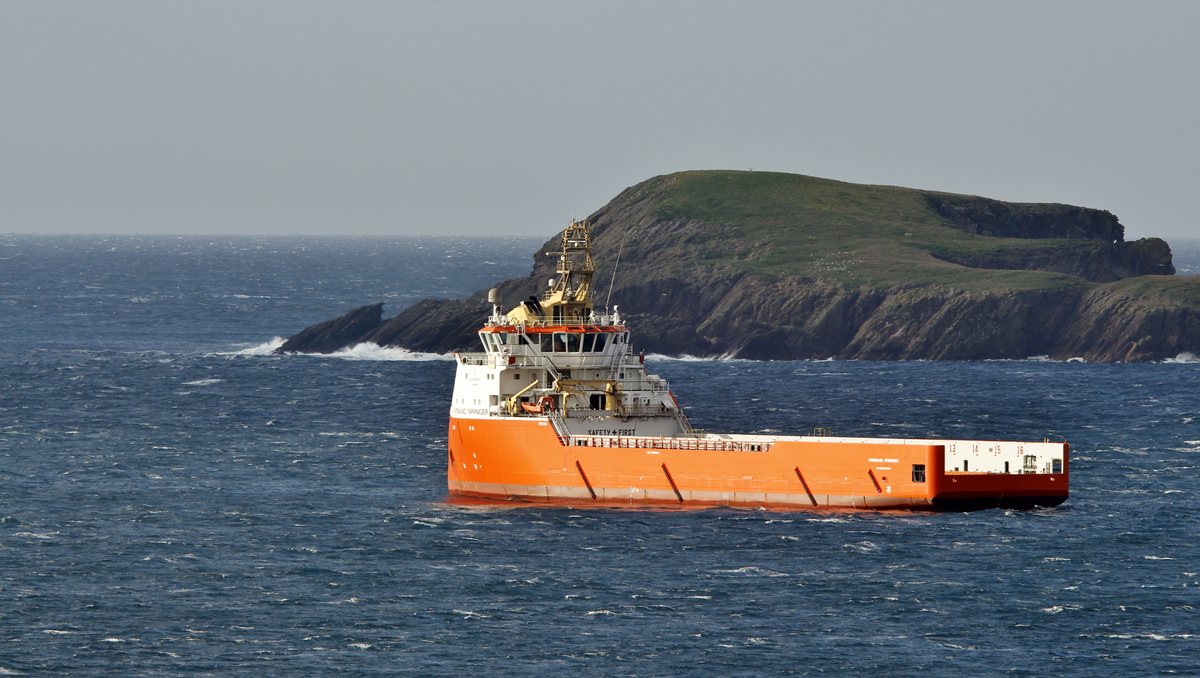
Editorial Insight
“When port charges become regulated, the cleanest charterparty is the one that already knows who pays which tariff — and on whose approved schedule.”
— Charterwa Editorial Analysis for Charterers & Vessel Owners
Most of this month’s Nigerian maritime coverage has focused on enforcement at sea and the long-awaited Cabotage Vessel Financing Fund. A quieter change on the quayside may matter just as much to anyone pricing a voyage or an offshore support contract: Nigeria now has a statutory economic regulator for its ports.
The Nigerian Ports Economic Regulatory Agency Act, 2026 repeals the Nigerian Shippers’ Council Act and establishes the Nigerian Ports Economic Regulatory Agency (NPERA). Legal commentary from ǼLEX and Olaniwun Ajayi records that the Act received presidential assent on 19 June 2026, and the Federal Ministry of Information has reported that NPERA has formally commenced operations. In mid-October, the Minister of Marine and Blue Economy, Adegboyega Oyetola, unveiled the agency’s logo at the ministry’s third-quarter stakeholder engagement in Lagos.
This article sets out what has changed, where the open questions sit, and what charterers and owners can sensibly do now — without guessing at tariff levels that have not yet been published.
1. What NPERA Is — and What It Replaces
Since 2014 the Nigerian Shippers’ Council acted as the interim port economic regulator, a role that rested on a thin statutory base and was repeatedly contested. The NPERA Act puts that function on a permanent footing and widens it. According to the law-firm analyses cited above, NPERA’s mandate covers:
- Tariffs, rates and charges — setting guidelines, including minimum and maximum levels, and publishing tariffs where it considers necessary
- Registration of regulated service providers
- Service-delivery standards and monitoring of compliance with port concession and service-level agreements
- Complaints, investigations, dispute resolution and enforcement
- Trade facilitation and protection of shippers, providers and users of regulated services
The definition of the regulated sector is broad. ǼLEX summarises it as ports, terminals, off-docks, jetties and offshore platforms; Olaniwun Ajayi notes that “regulated services” include vessel reception, cargo handling and storage, stevedoring, haulage, freight forwarding and clearance, off-dock and inland dry port operations, terminal and jetty operations and logistics services. That breadth is why the Act is relevant not only to liner and bulk trades but also to offshore logistics bases and the jetties that serve oil and gas supply chains.
2. The Tariff-Filing Regime in Plain Terms
The provisions most likely to touch a charter budget are the tariff sections. As summarised by ǼLEX and Olaniwun Ajayi:
- NPERA, in consultation with providers and users, sets guidelines on tariffs, rates and charges, including minimum and maximum levels.
- Every regulated service provider must file its tariffs with NPERA, publish its applicable fees and rates, and may not charge outside the approved guidelines without the Agency’s consent.
- Publishing tariffs in contravention of the Act is a criminal offence. Olaniwun Ajayi reports minimum fines of ₦2,000,000 for specified service providers and ₦20,000,000 for shipping companies, seaport terminal operators and inland dry port operators, doubled for subsequent offences. Administrative sanctions can extend to suspension, revocation and de-registration.
Two practical consequences follow. First, port and terminal charges should become more visible and more predictable over time, because there will be a filed, published schedule to point to. Second, a charge that is not on an approved schedule becomes something a user can query formally, rather than simply absorb.
3. The Open Question: NPERA and the NPA
The Nigerian Ports Authority keeps its role as landlord, infrastructure provider and operational authority, including pilotage and navigational services, and its enabling Act still gives it powers over harbour dues, ship dues and rates for its own facilities (see the OAL Q3 2026 regulatory update). Yet the NPERA Act brings NPA services within its definition of prescribed services, defines tariffs broadly enough to include harbour and pilotage dues, and gives NPERA power to issue tariff guidelines “to the exclusion of any other body or authority”.
ǼLEX flags this as a potential overlap that has not yet been settled in practice. Until NPERA and the NPA publish a working arrangement, charterers and owners should not assume that any particular due will rise, fall or be restructured. The prudent position is simply to know which schedule each charge is drawn from.
4. What Charterers Should Check Now
For EPC contractors, traders and oil and gas logistics buyers fixing tonnage into Nigerian ports or offshore bases, the change argues for tighter paperwork rather than a change of strategy:
- Port cost allocation clauses. Confirm who bears port dues, terminal charges, pilotage, towage and agency fees under your charterparty form. On time charters these usually sit with the charterer; on voyage charters, with the owner unless otherwise agreed. Make it explicit.
- Change-in-law and new-charges wording. Check whether your fixture deals with charges introduced or revised by a regulator after fixing. A clear clause avoids a dispute if a filed tariff differs from what was budgeted.
- Itemised disbursement accounts. Ask port agents to itemise proforma and final disbursement accounts against published schedules. Unexplained line items are now easier to challenge.
- Offshore base and jetty costs. For PSV, AHTS and crew boat contracts, identify which jetty or logistics base the vessel will work from and whether its charges are on a filed schedule.
- Contemporaneous records. Keep copies of the tariff schedule in force on the date of service. If a complaint or dispute goes to NPERA, dated evidence matters.
5. What Vessel Owners Should Check Now
Owners quoting into Nigeria carry port costs directly on voyage business and indirectly on time-charter competitiveness:
- Quote assumptions. State in offers which port and terminal costs are included, and on what basis they were estimated.
- Agency appointments. Prefer agents who can show the provider schedules they are applying and who will flag non-standard charges before payment.
- Complaint channels. NPERA has an express complaints and dispute-resolution remit. Owners facing recurring unexplained charges at a terminal or jetty now have a statutory route, alongside commercial negotiation.
- Compliance stacking. Port economic regulation sits alongside, not instead of, NIMASA’s enforcement drive. NIMASA’s Deep Blue assets and its intelligence-led “Blue-Green” inspections have checked statutory certificates, voyage documentation, surcharge obligations and Cabotage compliance, and recent reporting describes new drones and armoured vehicles supporting those operations. A vessel that is commercially well priced but paper-weak remains exposed.
6. Why This Matters for Vessel Finance
Lenders and Primary Lending Institutions assessing Cabotage Vessel Financing Fund applications, or commercial vessel loans, look for predictable cash flows. Clearer, published port charges and an available regulatory complaints route reduce one source of voyage-cost volatility. Owners preparing finance applications can strengthen their models by showing how port costs are allocated under existing charters and what tariff assumptions they have used — rather than relying on lump-sum estimates.
That will not by itself move any disbursement timeline; the Minister’s October directive to fast-track CVFF processing did not announce a specific date. It does, however, make a well-documented charter book easier to defend in credit review.
7. What to Watch Next
- Publication of NPERA’s first tariff guidelines and the provider registration process
- Any working protocol between NPERA and the NPA on harbour, ship and pilotage dues
- How NPERA applies its remit to jetties and offshore platforms serving the oil and gas sector
- Early complaints or enforcement decisions that show how strictly filing rules will be applied
How Charterwa Helps
Clear cost allocation starts with clear requirements. On Charterwa you can:
- Browse vessel categories to compare tonnage suited to Nigerian and Gulf of Guinea operations
- Submit a structured charter request setting out laycan, specification, trading area and cost-allocation expectations
- List and manage vessels so owners can present availability and documentation alongside their offers
- Explore maritime services for agency, survey, repair and technical support
Charterwa provides software tools for discovery and structured negotiation. Final charterparties, port appointments and regulatory filings remain bilateral between counterparties and their licensed advisers.
Fix Tonnage With Clear Terms on Charterwa
Submit structured charter requests, list your vessels, or explore maritime services across Nigeria and West Africa.
Sources
- ǼLEX — The Nigerian Ports Economic Regulatory Agency Act 2026
- Olaniwun Ajayi — NPERA Act 2026 analysis (PDF)
- Federal Ministry of Information — NPERA begins operations
- OAL — Nigeria Maritime Regulatory Update: Q3 2026
- BizWatch Nigeria — Oyetola directs NIMASA to fast-track CVFF; NPERA logo unveiled
- Punch — NIMASA deploys drones, armoured vehicles against sea crimes